Sciatica
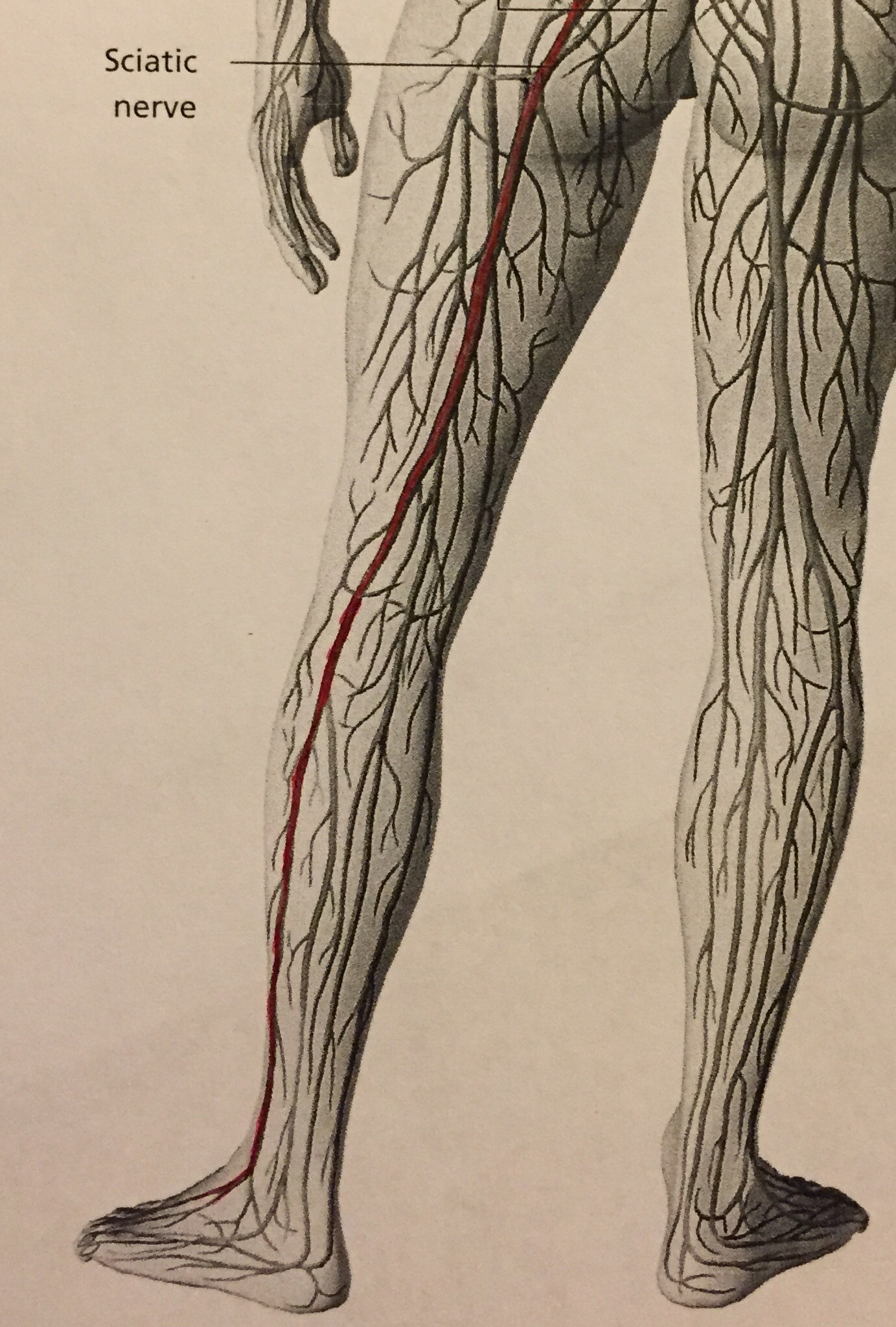
 The sciatic nerve is the longest and largest spinal nerve in the human body. As you can see from the picture, it’s pretty thick too! It runs from the lower back through the buttocks and down the back of each leg. It supplies sensation to the sole of the foot, the ankle, the entire lower leg and the back of the thigh. When something irritates or compresses the sciatic nerve, it can result in pain anywhere from the low back to the toes. Symptoms usually affect only one leg and the area affected may also feel numb, weak or tingly (and it’s worth noting that even though the sciatic nerve runs down the back of each leg, people with sciatica often report pain at the front of the thigh and/or shin).
What are the causes?
Causes of sciatic pain include spinal stenosis (a narrowing of the spinal canal), disc herniation and inflammation of the sacroiliac joints, but probably the most common cause is muscle spasm. If the piriformis or the gluteal muscles go into spasm this can cause irritation to or pressure on the sciatic nerve. This can turn into a vicious cycle of holding your breath and tensing up, because you’re in such severe pain—which creates more pain.
What about recovery from sciatica?
Although sciatica can cause a frightening amount of pain and/or numbness and lower leg weakness, most people recover from sciatica within a few days or weeks without lasting damage. We have seen community acupuncture offer considerable pain relief for people suffering from acute cases of sciatica. It is not unusual for someone to stagger in to our clinic and walk out with noticeably more ease.
We have also seen patients with chronic sciatic pain use community acupuncture to achieve lower and lower levels of pain over time. We’ve explained before how acupuncture reliably eases the body from flight or flight mode into rest-and-digest mode, which makes it an excellent tool for breaking the vicious cycle of pain → tension → worse pain. This is also a good time to remind you that we don’t stick needles in the pain; some of our favourite points for effectively treating sciatic pain are on the back of the hand and the inside of the ankles, so you don’t have to remove any clothing or worry about needles in already painful spots.
If you have any questions about how community acupuncture can help you with sciatica, please get in touch.
Your initial consultation is free. Call or text us to request a free phone call.
Or you can book now.